8 hr
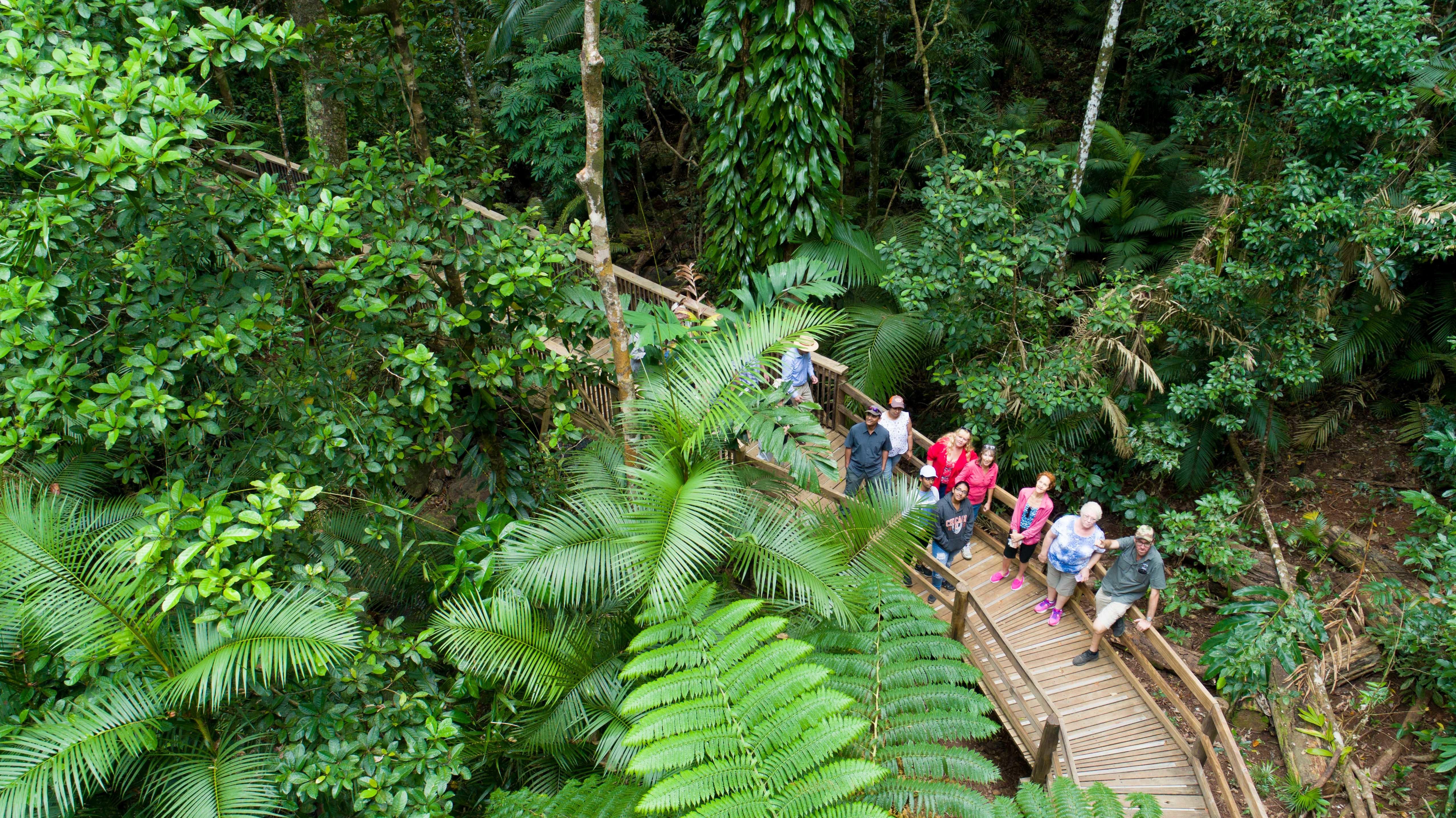
Daintree Rainforest & Cape Tribulation 4WD Adventure
Journey through ancient rainforest and coastal wilderness on a full-day guided expedition from Cairns
Reserve
Hand-picked by our editors — only the best 5 Daintree experiences from 47 reviewed.
Verified partners for every tour, free cancellation where available, and instant confirmation on every booking.
8 hr
Journey through ancient rainforest and coastal wilderness on a full-day guided expedition from Cairns
Reserve
11 hr
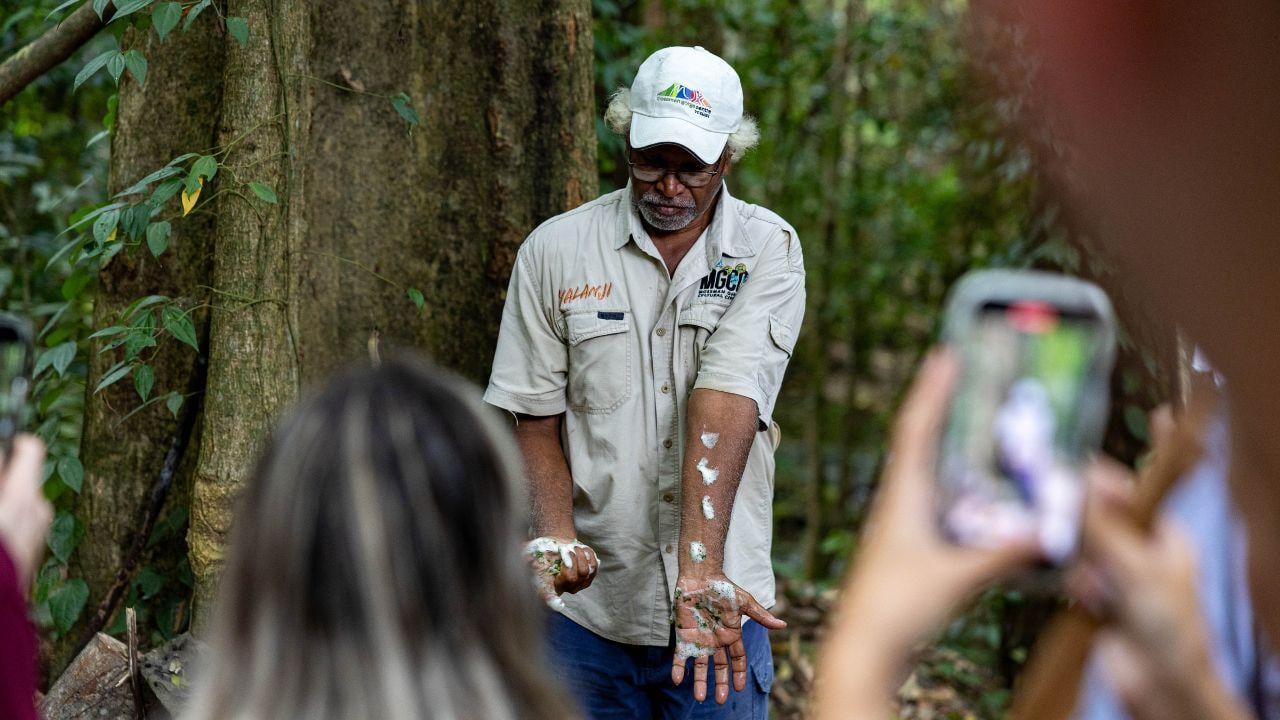
Explore where ancient rainforest meets coral reef—cruise the Daintree River, walk Mossman Gorge, and join a traditional Indigenous ceremony.
Reserve
12 hr
Journey through ancient rainforest to where the jungle meets the reef on this premium small-group experience
ReservePrices from verified partners. Availability updates in real time at checkout. Free cancellation policies apply where shown.
The landmarks, rooms, and views travelers on this tour remember — all visible on a single visit.
Navigate through dense root systems where crocodiles often hide
Estuarine Crocodile
Birdlife Spotting
Riverbank Vegetation
Quiet Electric Boat
They complement each other; most visitors who do both find the solar-powered vessel superior for intimate observation, while the larger boat offers a traditional group excursion.
| Feature | Top pick Solar Whisper | Crocodile Express |
|---|---|---|
Propulsion Technology |
Electric solar motor | Diesel engine |
Vessel Size |
Small boat (up to 25) | Large vessel (up to 60+) |
Wildlife Disturbance |
Minimal (silent) | Moderate (engine noise) |
Group Atmosphere |
Intimate and quiet | Social and traditional |
Departure Frequency |
High frequency throughout day | Scheduled daily departures |
Price |
40 AUD (summer) | 45–60 AUD (summer) |
| See tickets → |
Verdict: Choose the daintree river crocodile & wildlife cruise tickets if you prioritize silence for spotting reptiles, whereas the daintree river crocodile & wildlife cruise tour options from the rival are better suited for those preferring classic daintree river crocodile & wildlife cruise tours.
Choose your ticket, select your date, and reserve in under two minutes. Secure checkout handled by our verified partner.
Instant confirmation by email, with a mobile voucher you can save offline. No printing, no queuing at a collection desk.
Arrive at the entrance, show your voucher on your phone, and walk in. Most tickets include priority or skip-the-line access.
Practical details for your visit straight from our verified partners — hours, access, rules, and how to get there.
Daintree River, Daintree
Look for signage near the boat ramp
Follow the Daintree Road toward the river ferry crossing.
Lightweight, breathable clothing is recommended for the tropical climate. Wear a hat and sunglasses to protect against sun glare while on the daintree river crocodile & wildlife cruise.
Only small personal bags are permitted on the vessel due to limited storage space. Please keep all belongings secure to prevent them from falling into the river during your daintree river crocodile & wildlife cruise tour.
Photography is encouraged throughout your daintree river crocodile & wildlife cruise. Use a telephoto lens to capture wildlife from a safe distance without disturbing the animals.
The daintree river crocodile & wildlife cruise docks may vary by tide level. Contact the operator directly to confirm accessibility for mobility aids before booking your daintree river crocodile & wildlife cruise tickets.
Mobile phones are permitted for photos and videos. Ensure your device is secured with a strap while observing wildlife.
Families are welcome, and children under the age of 16 should be supervised at all times. This daintree river crocodile & wildlife cruise offers a safe environment for observing local species.
Outside food is generally discouraged to keep the vessel clean. Water is recommended to stay hydrated during your daintree river crocodile & wildlife cruise.
Pets are not permitted on the vessel. Only registered service animals are allowed with prior notification.
Smoking is strictly prohibited on the boat. Please follow all instructions given by your skipper for a safe Daintree River experience.
Best time to go, insider tips, nearby landmarks, and the cancellation fine print — flip through to skim what matters to you.
How crowds, weather, and events shift across the year.
Mild temperatures and clear skies are common from September to November.
Expect high humidity and occasional rain showers from December to March.
Cooler, drier weather prevails from April to June, ideal for viewing.
July and August are perfect for spotting crocodiles basking on riverbanks.
Small details that turn a good visit into a great one.
Secure your daintree river crocodile & wildlife cruise tickets early, especially during peak school holidays.
Aim for the 07:00–16:30 window to catch wildlife at their most active.
High tide is often better for navigating deeper into mangrove channels.
The skipper provides valuable insights into the local ecosystem.
Minimize noise to ensure better sightings of shy wildlife.
Non-bookable sights within a short walk — free to visit, easy to pair.
Ancient tropical forest with diverse plant species.
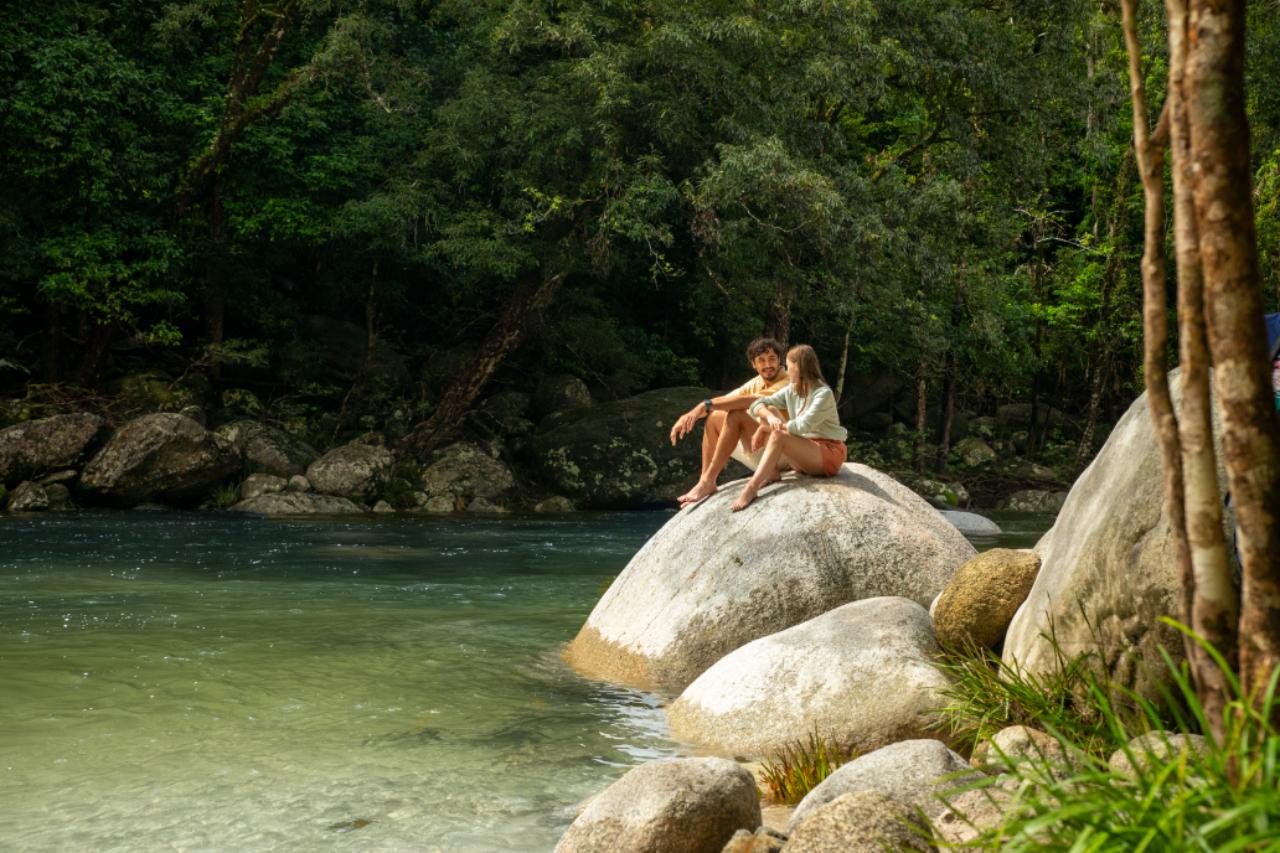
A site featuring granite boulders and clear swimming holes.
Where the rainforest meets the Great Barrier Reef.
Flexible, no hidden fees.
Cancellations made within the operator's specified notice period are subject to terms outlined at booking. The standard adult cruise fare of 40 AUD per person is non-refundable if terms are breached.
Hand-picked options within walking distance — pick a district for vibe, or a specific hotel for convenience.
Range of local guesthouses and B&Bs.
High-end stays for coastal visitors.
Convenient access to regional amenities.
The Daintree River carries 135 million years of evolutionary memory in its tannin-stained water. Where the river meets the Coral Sea, saltwater crocodiles — Crocodylus porosus, the largest living reptile — rest on mudbanks under mangrove canopies that predate the breakup of Gondwana. The river system drains the oldest continuously surviving tropical rainforest on Earth, a 1,200-square-kilometre remnant of the supercontinent's Jurassic vegetation. Solar-powered vessels now glide through these channels without engine noise, allowing close approach to estuarine crocodiles, azure kingfishers, and great-billed herons that would scatter under the vibration of a combustion motor. The Daintree was named in 1873 by explorer George Elphinstone Dalrymple after geologist Richard Daintree, but the Kuku Yalanji people have called the river and forest Dubuji for over 50,000 years. The river's ecological significance was formally recognized in 1988 when the Wet Tropics of Queensland — including the Daintree catchment — became a UNESCO World Heritage Site. The listing cited the area's role as a living museum of plant evolution: 65 per cent of fern species and 30 per cent of orchid species found nowhere else on the continent grow within a 30-kilometre radius of the river mouth. The mangrove forests fringing the Daintree function as a brackish-water nursery for barramundi, mud crabs, and juvenile bull sharks that migrate upstream during monsoon floods. Crocodile populations in the Daintree recovered slowly after commercial hunting ended in 1974. By 2026, an estimated 70 adult saltwater crocodiles inhabit the 12-kilometre navigable stretch of the river. Males exceed five metres in length and weigh over 500 kilograms; females nest in the wet season between November and March, burying clutches of 40 to 60 eggs in sandbanks above the high-tide line. Daintree River crocodile & wildlife cruise operators navigate a delicate balance: approaching close enough for clear photography without triggering a stress response. The river's width narrows to 80 metres in the upper tidal zone, forcing crocodiles and vessels into shared corridors during the two-hour window before high tide. Beyond the crocodiles, the river harbours 430 bird species, including the prehistoric-looking southern cassowary, which occasionally forages along the river's western bank. The forest canopy overhanging the water shelters amethystine pythons, Boyd's forest dragons, and the ulysses butterfly, whose iridescent blue wings span 14 centimetres. Early-morning cruises coincide with the feeding activity of great egrets and white-bellied sea eagles; late-afternoon departures capture the golden-hour light filtering through fig and mahogany branches that lean over the water at 30-degree angles, their root systems exposed by tidal erosion.
"The river system drains the oldest continuously surviving tropical rainforest on Earth, a 1,200-square-kilometre remnant of the supercontinent's Jurassic vegetation."
A step-by-step walkthrough of the visit — what you'll see, how long each stage takes, and the details that matter.
You board the Solar Whisper at Daintree Village, stepping onto a flat-decked catamaran that seats 20 passengers in tiered rows facing forward. The vessel moves without engine rumble — only the faint hum of electric motors and the slap of water against the hull. Your guide noses the bow into a narrow channel between red mangrove roots, pointing out a juvenile estuarine crocodile submerged to its nostrils 12 metres ahead. You raise your camera; the boat drifts to within six metres before the crocodile registers movement and sinks beneath the surface. The river widens near the second bend. A four-metre female basks on a mudbank, her ridged tail trailing into the current. You count the scutes along her spine while the guide explains thermoregulation: crocodiles cannot sweat, so they gape their jaws to release heat through the mucous membranes of the throat. The boat idles in place for three minutes while passengers photograph the open jaw, then continues upstream past a strangler fig whose roots cascade 15 metres from a river-red gum. You pass under a canopy arch formed by overlapping melaleuca branches. An azure kingfisher — no larger than your fist — perches on a low limb, its cobalt plumage vivid against the dark water. The guide cuts the motor entirely, allowing the boat to drift with the incoming tide while a white-bellied sea eagle circles overhead, scanning for mullet. You glance at your watch: 90 minutes have elapsed, and the vessel is now three kilometres upstream. The return journey takes 30 minutes with the current.
The attraction is open daily from 07:00–17:30.
Vessel access for a daintree river crocodile & wildlife cruise can be limited by tide levels and ramp conditions, so please check ahead.
It is recommended to purchase your daintree river crocodile & wildlife cruise tickets well in advance to guarantee your spot.
There is no set age limit for the daintree river crocodile & wildlife cruise, but minors must be accompanied.
Yes, professional and amateur photographers are welcome to bring cameras on the daintree river crocodile & wildlife cruise.
Operators monitor conditions closely and will reschedule or refund if the cruise is cancelled due to weather.
The best arrival window for your daintree river crocodile & wildlife cruise is 07:00–16:30 for prime wildlife spotting.
Yes, parking is provided near the daintree river crocodile & wildlife cruise departure points.
On your daintree river crocodile & wildlife cruise, you may see estuarine crocodiles, azure kingfishers, and various snake species.