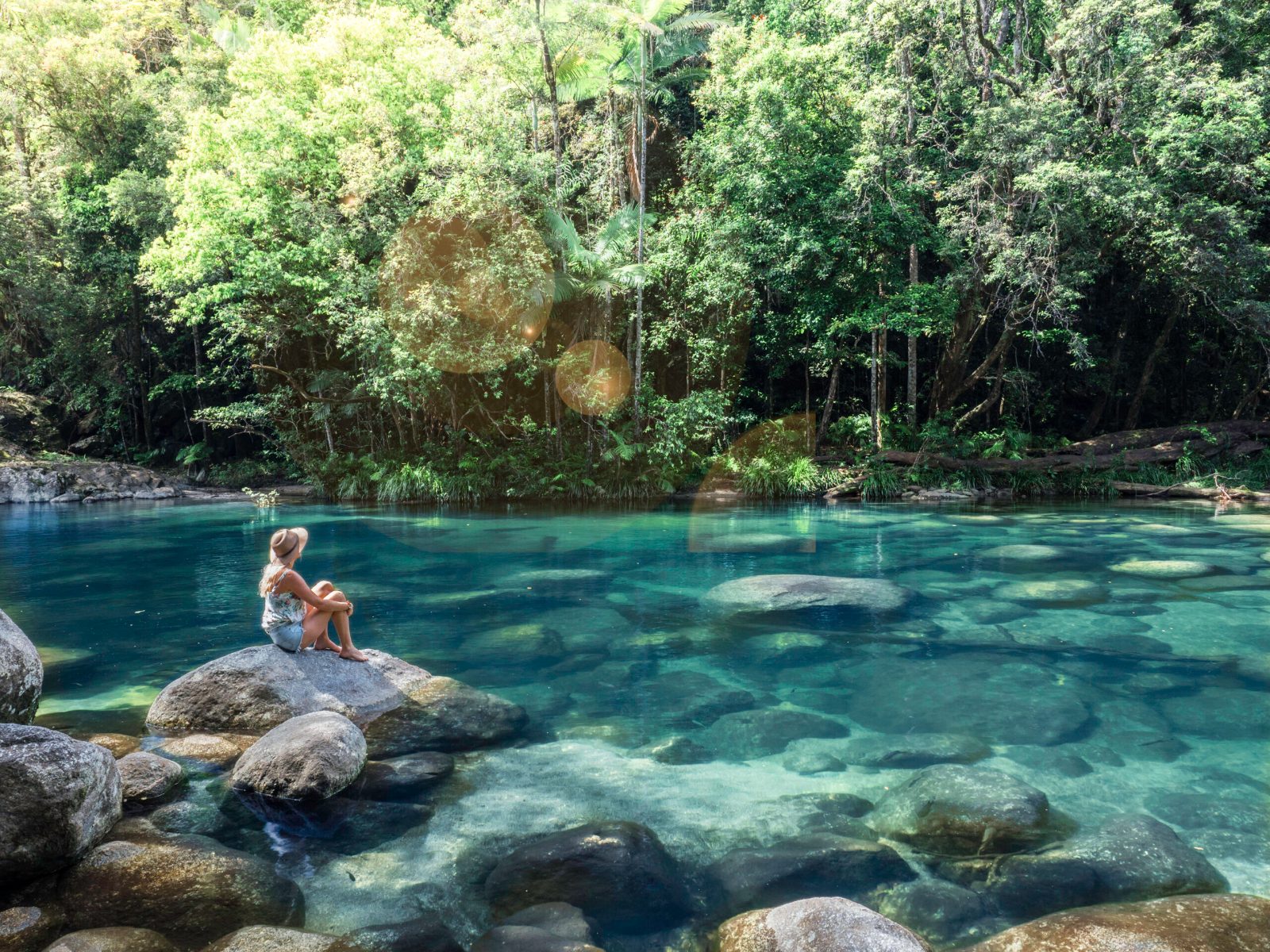
Mossman Gorge
20 min drive
This area features accessible rainforest boardwalks and swimming holes that provide a cooling contrast to the river environment.
The Daintree River supports one of Australia's densest populations of estuarine crocodiles, yet no one can give you an exact headcount. Wild crocodiles don't sit still for censuses, and the river's mangrove channels make comprehensive surveys difficult. What researchers can tell you is the density range, the size classes present, and how many individual animals experienced guides recognize on repeat sightings.
Quick answer
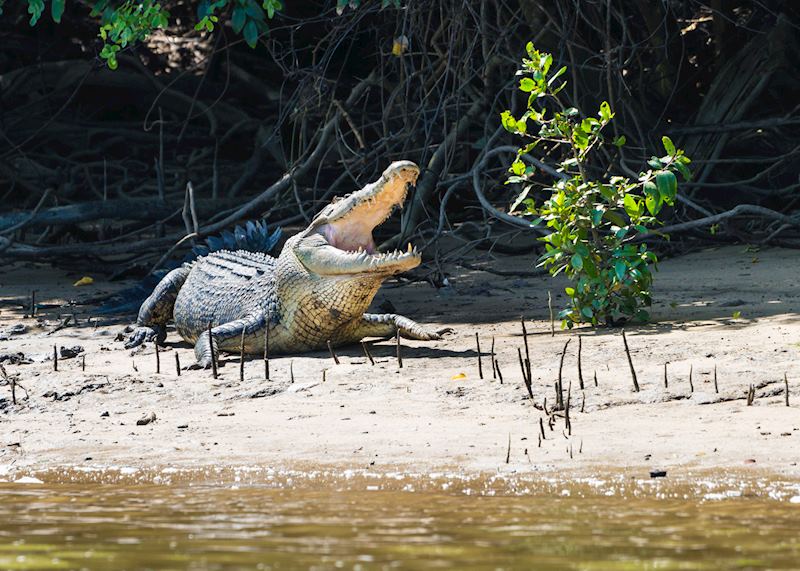
The Daintree River is home to an estimated 70 to 90 adult saltwater crocodiles, with density reaching approximately one crocodile per 500 meters of main channel during peak basking conditions. Population estimates vary because crocodiles move between tidal zones, submerge for extended periods, and juveniles occupy shallow creeks not included in standard surveys. Cruise operators report spotting between three and twelve individual crocodiles per two-hour trip, depending on weather, tide, and time of day.
Saltwater crocodiles have occupied the Daintree River system for thousands of years, long before the first cruise boats began running scheduled wildlife tours. The population you see today reflects decades of legal protection following the species' near-extinction in the 1970s, when unregulated hunting reduced Queensland's crocodile numbers to critical lows. Since full protection was enacted in 1974, the Daintree population has recovered to what biologists consider carrying capacity for the available habitat. Estimating how many crocodiles in Daintree River requires understanding that these animals don't remain in fixed locations. A mature male may patrol a three-kilometer stretch of river, while females with hatchlings stay closer to nesting banks. Tidal flow pushes crocodiles upstream during flood events and draws them toward the estuary during dry months. Researchers conduct spotlight surveys after dark, when crocodile eyes reflect boat-mounted lights, and daytime counts during cooler months when animals bask on exposed banks. The most reliable figures come from long-term photo identification studies, where individual crocodiles are recognized by scale patterns, scars, and missing teeth. Guides who run daily trips often know two dozen animals by sight and track their movements across preferred basking logs and ambush points. The number you encounter depends less on total population than on behavior patterns tied to temperature and tide. Crocodiles are ectothermic, meaning they rely on external heat to regulate body temperature. During the cooler months from May through September, animals spend hours on mudbanks absorbing morning sun, making them easy to spot from passing boats. In the wet season heat, crocodiles remain submerged in deep channels, surfacing only to breathe. Low tide exposes more sandbanks and concentrates fish in narrow channels, drawing crocodiles into open water where cruise passengers can photograph them. High tide spreads animals across flooded mangrove roots, reducing visibility. A cruise departing at seven in the morning during August typically records higher sighting numbers than an afternoon trip in February, even though the underlying crocodile population hasn't changed. What matters for visitors is not the total count but the near-certainty of sightings during optimal conditions. The Daintree's crocodile density ranks among the highest in Australia, and guides position boats to maximize encounters without disturbing animals or breaching safety zones. Most crocodiles you'll see measure between two and four meters in length, with the occasional five-meter territorial male spotted near deeper bends. Hatchlings and juveniles stay hidden in narrow tributaries where larger crocodiles can't reach them, so cruise sightings skew toward adults and sub-adults confident enough to claim visible basking sites.
“Guides who run daily trips often know two dozen animals by sight and track their movements across preferred basking logs and ambush points.”
The Daintree River hosts a stable population of saltwater crocodiles, which are the only crocodile species found in this waterway. Researchers and local operators monitor these reptiles to understand the ecosystem's health and density.
Around 70 resident adult crocodiles
Male crocodiles reach 5 to 6 meters
Female crocodiles reach 3 meters
Exclusive saltwater crocodile habitat
Territorial nature affects distribution
Queensland's saltwater crocodile population faced near-extinction by the mid-twentieth century after decades of unregulated commercial hunting. From the 1940s through the early 1970s, professional hunters harvested crocodiles throughout tropical Australia for their valuable hides, which supplied luxury leather markets in Europe and North America. The Daintree River, with its dense mangrove corridors and tidal estuaries, became a prime hunting ground. Shooters worked at night using spotlights to locate the animals by their reflective eyes, and entire river systems were systematically cleared. By 1974, when Queensland finally enacted full legal protection, biologists estimated that fewer than three thousand saltwater crocodiles remained across the state's entire coastline. The 1974 Wildlife Act transformed the species' trajectory. Hunting ceased, nesting sites received protection, and penalties for illegal killing escalated. The Daintree population began a slow but steady recovery at approximately two percent per year, a rate constrained by the crocodile's late sexual maturity and long generation time. Scientific surveys in the 1980s documented only scattered individuals in the lower Daintree reaches. By the early 2000s, park rangers and researchers recorded breeding populations re-establishing throughout the river system. Understanding how many crocodiles in daintree river survived the hunting era helps explain why even today's recovered population remains vulnerable to disturbance. Today's visitors encounter a river system where saltwater crocodiles once again occupy every suitable habitat zone. The basking adults visible from cruise vessels, the slide marks in mudbanks, and the territorial males patrolling tidal channels all reflect five decades of patient recovery. Conservation signage along the river documents this restoration arc, and local operators emphasize the ongoing importance of CrocWise protocols that protect both humans and the species that nearly vanished from these waters.
Commercial hide hunters target Daintree River crocodiles for European and American luxury leather markets.
Intensive spotlight hunting depletes crocodile populations across Queensland's tropical river systems.
Queensland Wildlife Act grants full legal protection to saltwater crocodiles, ending all commercial and recreational hunting.
Daintree population begins slow recovery at approximately 2% annual growth rate from critically low baseline.
Scientific surveys confirm breeding populations re-established throughout the Daintree River system.
Recovered crocodile populations occupy all suitable habitats; conservation education and CrocWise protocols protect coexistence.
The best opportunity to spot crocodiles occurs during the dry season, as cooler temperatures encourage reptiles to bask on riverbanks. The optimal arrival window is 07:00–09:00 to maximize sighting opportunities before daily temperatures rise.
Cooler, 18°C–26°C
This period offers a 98% sighting rate as crocodiles frequently bask on banks. Low tide during these months provides the clearest visibility of exposed riverbanks.
Humid, 24°C–32°C
Sighting frequency drops to approximately 50% due to increased water levels and vegetation. Crocodiles are less reliant on sunning themselves when water temperatures remain high.
—
Arriving during this window aligns with the period of peak crocodile activity. Targeting a low tide within this early timeframe significantly increases the probability of sightings.
Verdict: The most effective time for viewing is during the dry season from June to September, specifically arriving within the 07:00–09:00 window at low tide.
Saltwater crocodiles are apex predators and the Daintree River is their natural habitat. Following Croc-Wise guidelines protects you and preserves the wildlife you're visiting to observe.
The Daintree River is located in Queensland, Australia, and is most easily accessed by driving north from Cairns or Port Douglas. Visitors typically arrive via the Captain Cook Highway to reach the river's various tour boat boarding points.
Captain Cook Highway from Cairns
Captain Cook Highway from Port Douglas
Daintree River Ferry crossing
The best arrival window is 07:00–09:00 for cooler weather and active wildlife. Refer to the official site at https://parks.des.qld.gov.au/parks/daintree for further updates.
The Daintree River serves as a gateway to the broader Wet Tropics, offering several natural landmarks that complement a morning crocodile cruise. These locations provide a logical progression for exploring the biodiversity of the region after your initial boat tour.
20 min drive
This area features accessible rainforest boardwalks and swimming holes that provide a cooling contrast to the river environment.
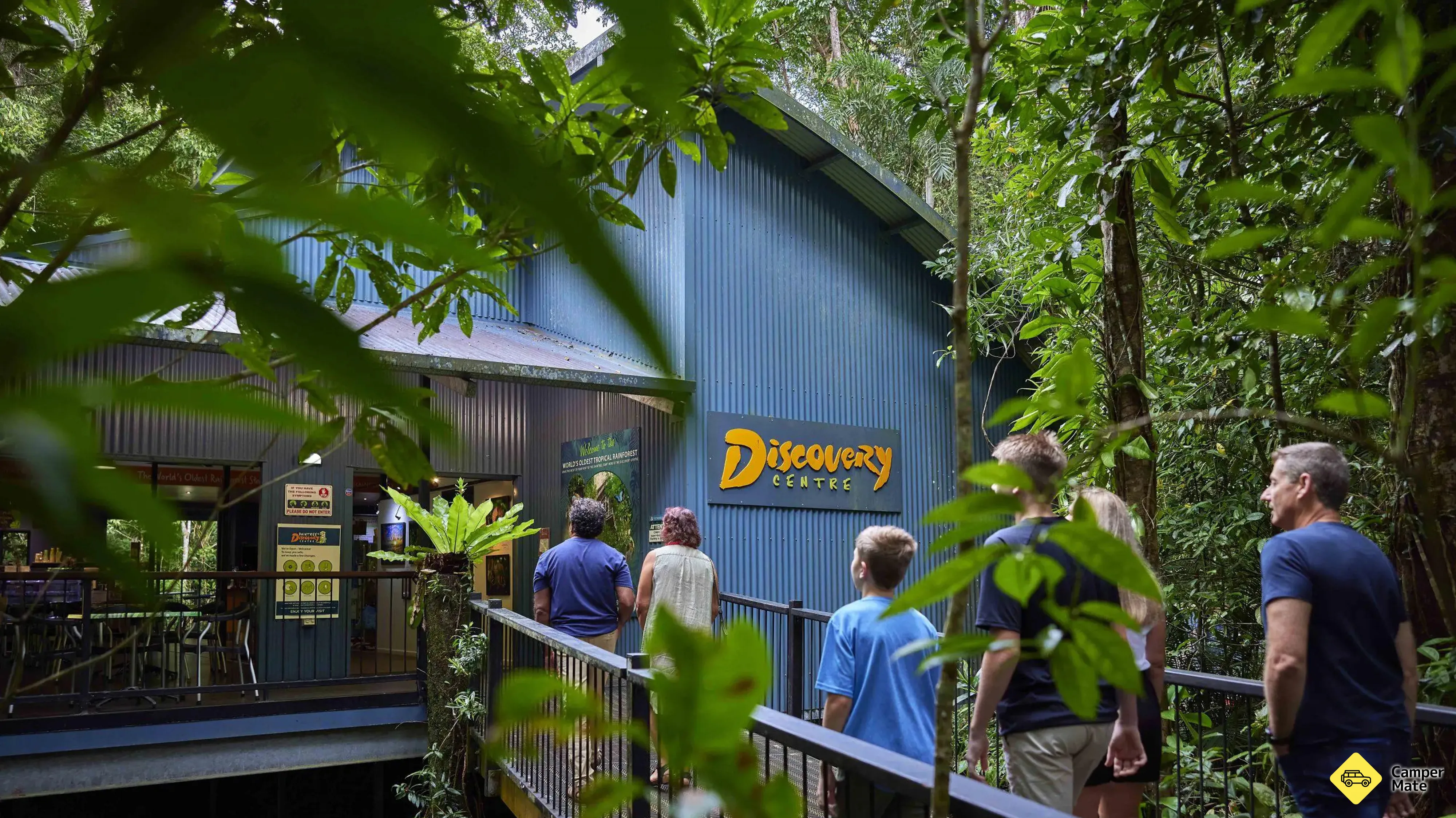
15 min drive
Located north of the river, this hub offers essential services and interpretive information regarding the local ecosystem.
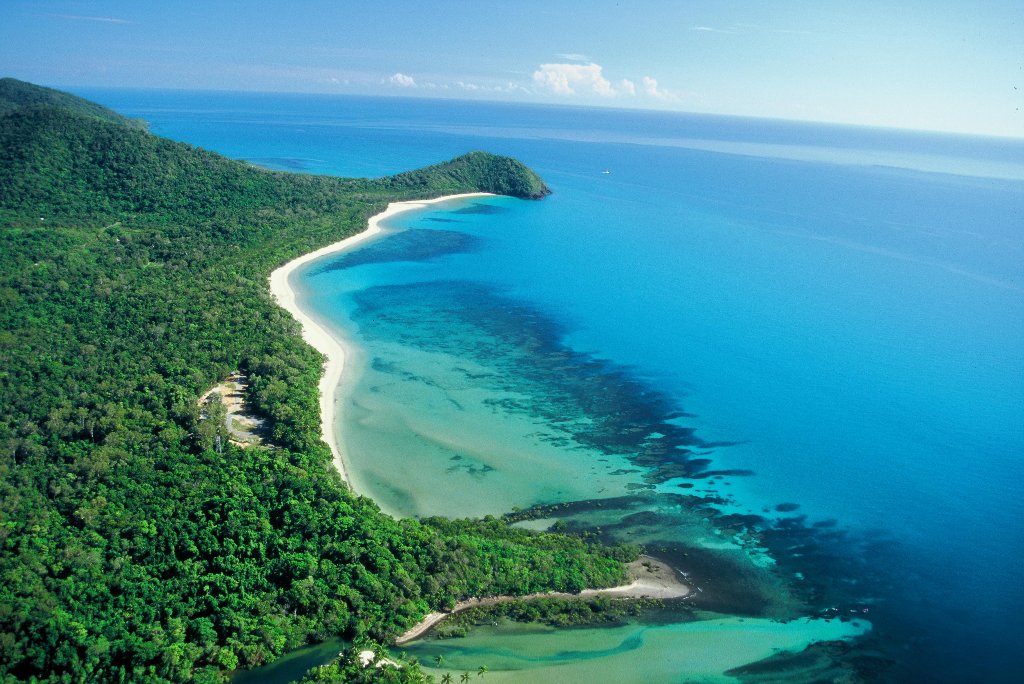
45 min drive
Where the rainforest meets the reef, this destination allows for extended coastal exploration following your river experience.
Everything you need to know about how many crocodiles in daintree river
Estimating exactly how many crocodiles in daintree river reside here is difficult, as populations fluctuate based on environmental conditions and seasonal movements. Researchers monitor the estuary, which serves as a prime habitat for the estuarine crocodile.
While sightings are common due to the high density of these apex predators, wild animal behavior remains unpredictable. Professional guides utilize their local knowledge to increase your chances of observing basking reptiles during your Daintree River crocodile tour.
The best arrival window for wildlife spotting is between 07:00 and 09:00, when cooler temperatures encourage crocodiles to bask on the riverbanks. Observing them during this period offers the most consistent opportunities to witness their natural behavior.
Visitors must always remain within the safety of their vessel and follow all skipper instructions when exploring this habitat. The river is a natural environment, and maintaining a respectful distance is essential for both human safety and the protection of the animals.
The number of crocodiles visible can vary, but these reptiles are present in the river system year-round. While you might ask how many crocodiles in daintree river are active in the cooler months, their visibility often depends on tide levels rather than just the season.
The Daintree River itself is a public waterway with 0 AUD entry fee. While there is no cost to access the river area, separate fees apply for commercial cruises and the vehicle ferry crossing.
Scientific surveys attempt to track the population density to understand how many crocodiles in daintree river occupy this unique ecosystem. These apex predators are territorial, and their distribution is influenced by available nesting sites and prey availability along the mangrove-lined banks.
Daintree Village Crocodile Cruises
Read more GuideAre There Crocodiles in the Daintree River?
Read more Tickets & toursBest Daintree River Crocodile Cruises
Read more Tickets & toursDaintree Crocodile Tours from Cairns
Read more Tickets & toursDaintree Crocodile Tours from Port Douglas
Read more Tickets & toursMossman Gorge & Daintree Crocodile Cruise
Read more Tickets & toursDaintree River Crocodile & Wildlife Cruises
Read more GuideDaintree Crocodile Cruise Reviews
Read more GuideDaintree Crocodile Tour Prices
Read more