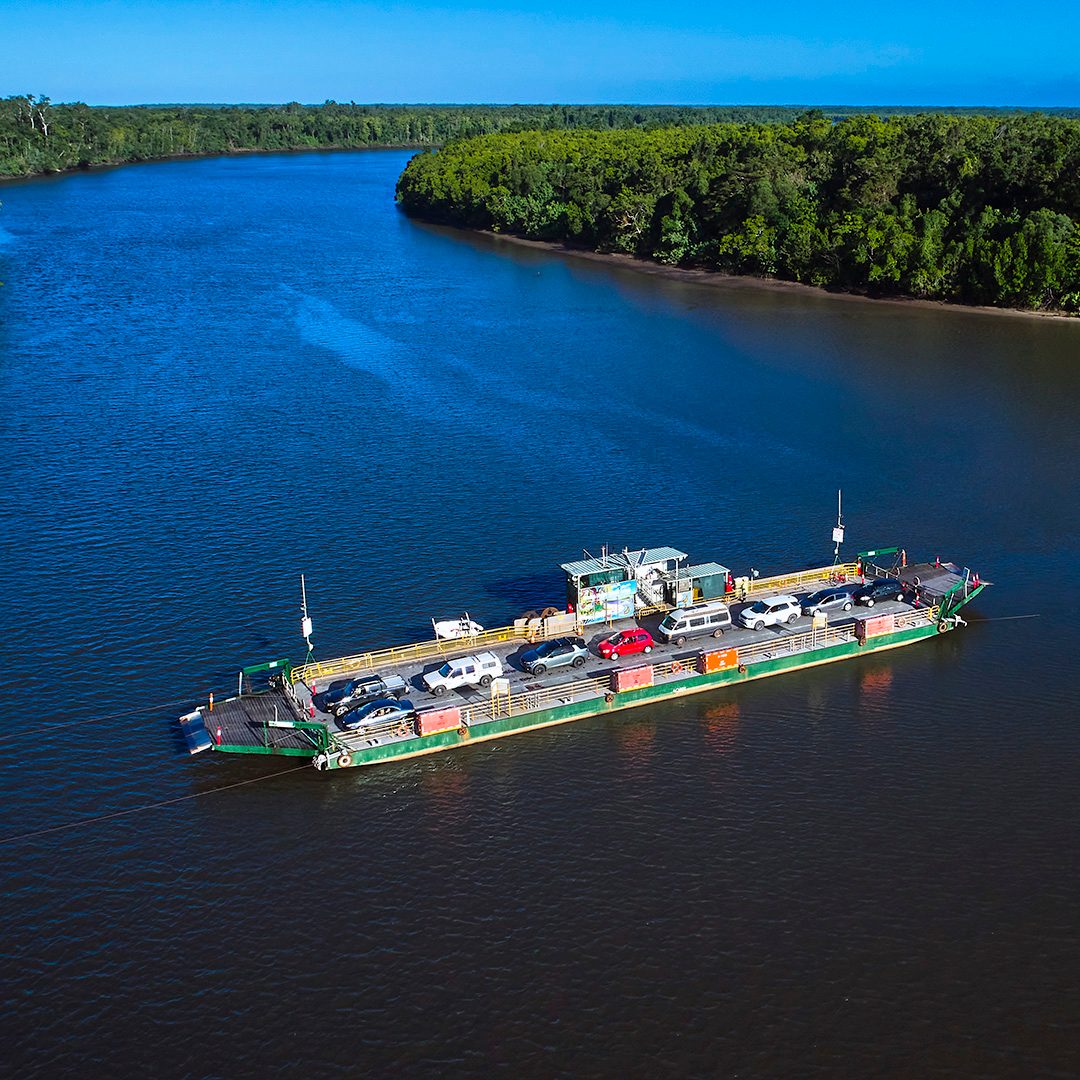
Daintree Ferry
5 min drive
This cable ferry is the primary transit point for vehicles crossing the river to reach Cape Tribulation. It provides a brief, practical vantage point of the river mouth area.
The Daintree River flows through one of the oldest rainforest systems on Earth, and its tidal reaches support a thriving population of apex predators. Visitors ask whether crocodiles inhabit these waters—and the answer shapes every boat tour, riverside walk, and swimming decision in the region.
Quick answer
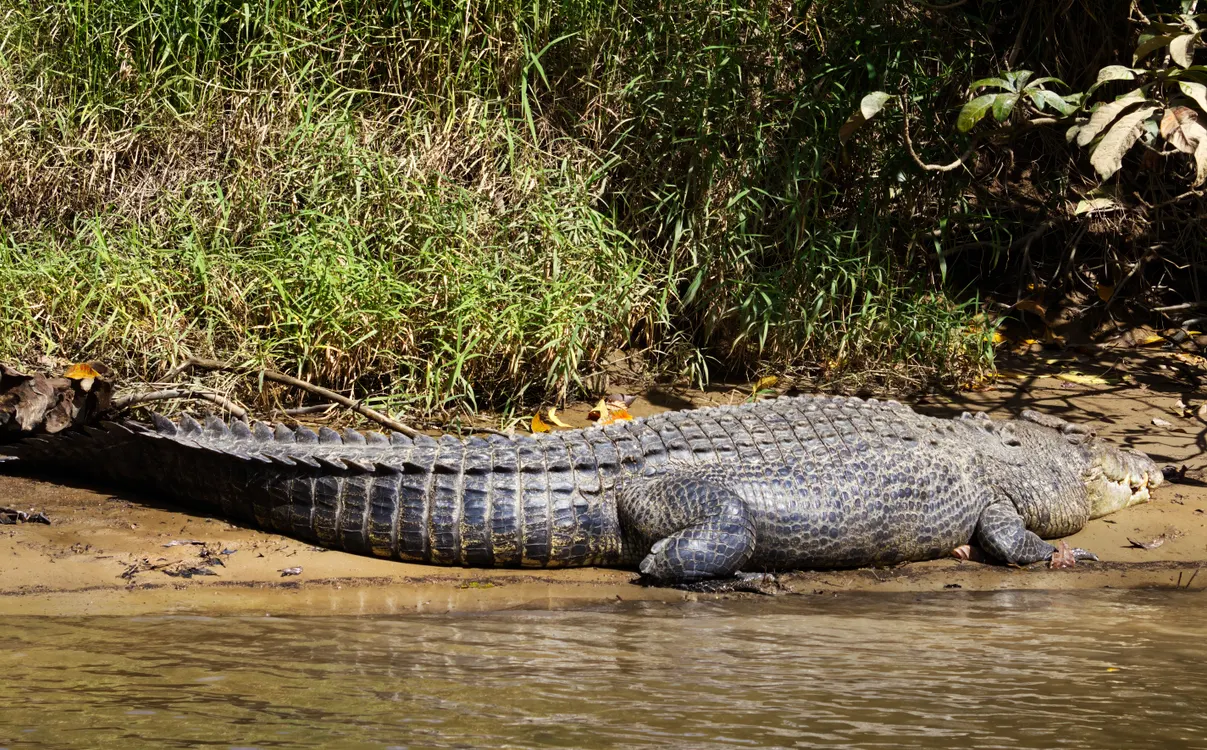
Yes, saltwater crocodiles live in the Daintree River year-round. Both estuarine crocodiles (salties) and freshwater crocodiles occupy different stretches of the river system, with salties dominant in tidal and brackish zones. Populations are protected under Queensland law, and sightings are common during guided river cruises, particularly in the early morning and late afternoon when reptiles emerge to regulate body temperature on exposed mudflats and riverbanks.
The Daintree River is home to one of Australia's highest concentrations of estuarine crocodiles, apex reptiles that have occupied these waterways for millennia. Saltwater crocodiles—Crocodylus porosus—thrive in the tidal lower reaches where brackish water meets the Coral Sea, while the smaller freshwater species, Crocodylus johnstoni, inhabit upstream sections beyond the tidal influence. Are there crocodiles in the Daintree River? The answer is unambiguous: salties patrol the estuarine zones in numbers that make the Daintree one of Queensland's most reliable crocodile habitats. Estuarine crocodiles can exceed five meters in length and weigh over 450 kilograms. They are territorial, highly adapted to both saltwater and freshwater environments, and capable of remaining submerged for extended periods. The river's mangrove-lined banks, deep pools, and tidal flats provide ideal basking sites and ambush points. Crocodile density in the Daintree system has grown since legal protection was introduced in the 1970s, and the population is now stable and closely monitored by Queensland Parks and Wildlife. Visitors encounter crocodiles most frequently during river cruises, which operate from the ferry crossing near the Daintree Village. Early morning and late afternoon departures coincide with peak activity—reptiles emerge to thermoregulate on mudbanks when air temperatures favor solar gain. Sightings are not guaranteed but are common enough that operators brief passengers on identification and behavior. The river is not a zoo; it is a functioning estuary where crocodiles occupy their natural range, and human presence is managed through regulated access rather than containment. The question of whether crocodiles inhabit the Daintree River extends beyond curiosity—it defines how the landscape is used. Swimming is prohibited in tidal sections, and signage at boat ramps and walking tracks reinforces the risk. The river remains open to exploration, but that exploration is structured around the reality of cohabitation with one of the region's defining species.
“The Daintree River supports one of Australia's highest concentrations of estuarine crocodiles, a population that has rebuilt steadily since legal protection began in the 1970s.”
The most effective time to observe crocodiles in the Daintree River is during the cooler months of June to September. During this period, lower ambient temperatures encourage crocodiles to bask on riverbanks to regulate their body heat.
Cooler, dry, 18°C–26°C
This season offers optimal visibility as crocodiles frequently haul out onto the banks to sunbathe.
Seasonal conditions apply
This is the official best arrival window for wildlife viewing when crocodiles are more likely to be seen.
—
Tide patterns influence visibility; receding tides often expose more of the riverbanks where crocodiles rest.
Verdict: The best opportunity to spot crocodiles is during the dry season months of June to September within the recommended arrival window of 06:00–17:00.
Misconceptions about crocodile behavior and presence in the Daintree River often arise from limited visibility and anecdotal reports. Clarifying these common myths helps visitors understand the reality of the ecosystem.
MythThe river contains both freshwater and saltwater crocodiles.
FactOnly saltwater crocodiles, also known as estuarine crocodiles, inhabit the Daintree River. Freshwater species are not found in this environment.
MythA hidden crocodile means the river is empty.
FactCrocodiles are masters of camouflage and can remain submerged for long periods. Their presence is constant, even when they are not visible on the riverbanks.
MythTour operators feed crocodiles to ensure sightings.
FactFeeding crocodiles is strictly illegal in Queensland. Wildlife viewing relies on natural behaviors and ethical observation practices rather than artificial intervention.
The Daintree River is home to saltwater crocodiles year-round, making vigilance and respect for warning signs essential. These rules exist to keep you safe in genuine crocodile habitat.
Access to the Daintree River and public areas is free of charge. Guided wildlife cruises operate independently and set their own pricing structures.
Verdict: Visitors typically pay 0 AUD to access the river, with costs only applying when selecting specific commercial guided cruise services.
The Daintree River serves as a gateway to the broader Wet Tropics World Heritage Area, with several significant landmarks located within a short drive. These sites allow visitors to experience diverse rainforest ecosystems alongside their river cruise.
5 min drive
This cable ferry is the primary transit point for vehicles crossing the river to reach Cape Tribulation. It provides a brief, practical vantage point of the river mouth area.
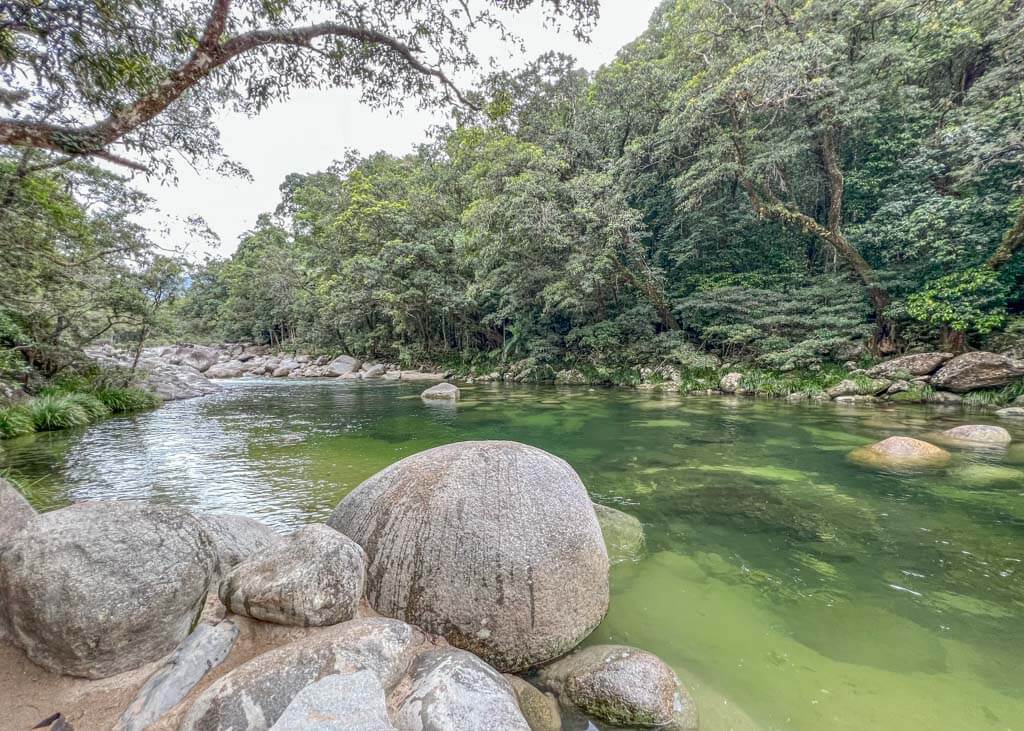
30 min drive
Located south of the river, this site features swimming holes and elevated boardwalks through rainforest canopy. It offers a contrasting experience to the river environment by focusing on freshwater river systems.
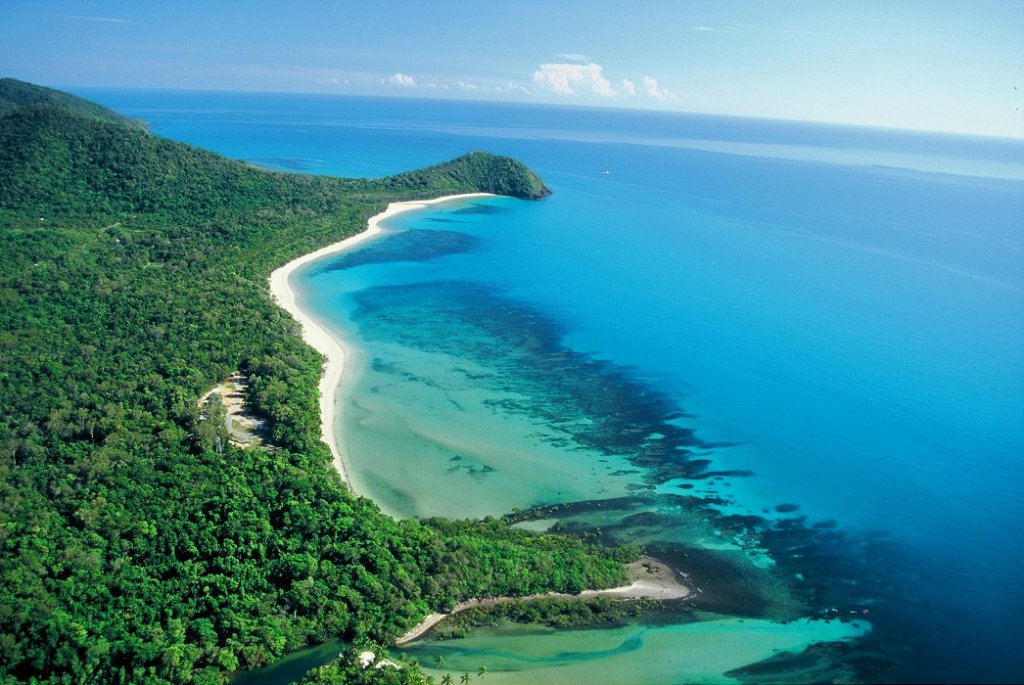
45 min drive
This area marks the location where the rainforest meets the Great Barrier Reef. It serves as a logical northern destination to explore after completing a river wildlife cruise.
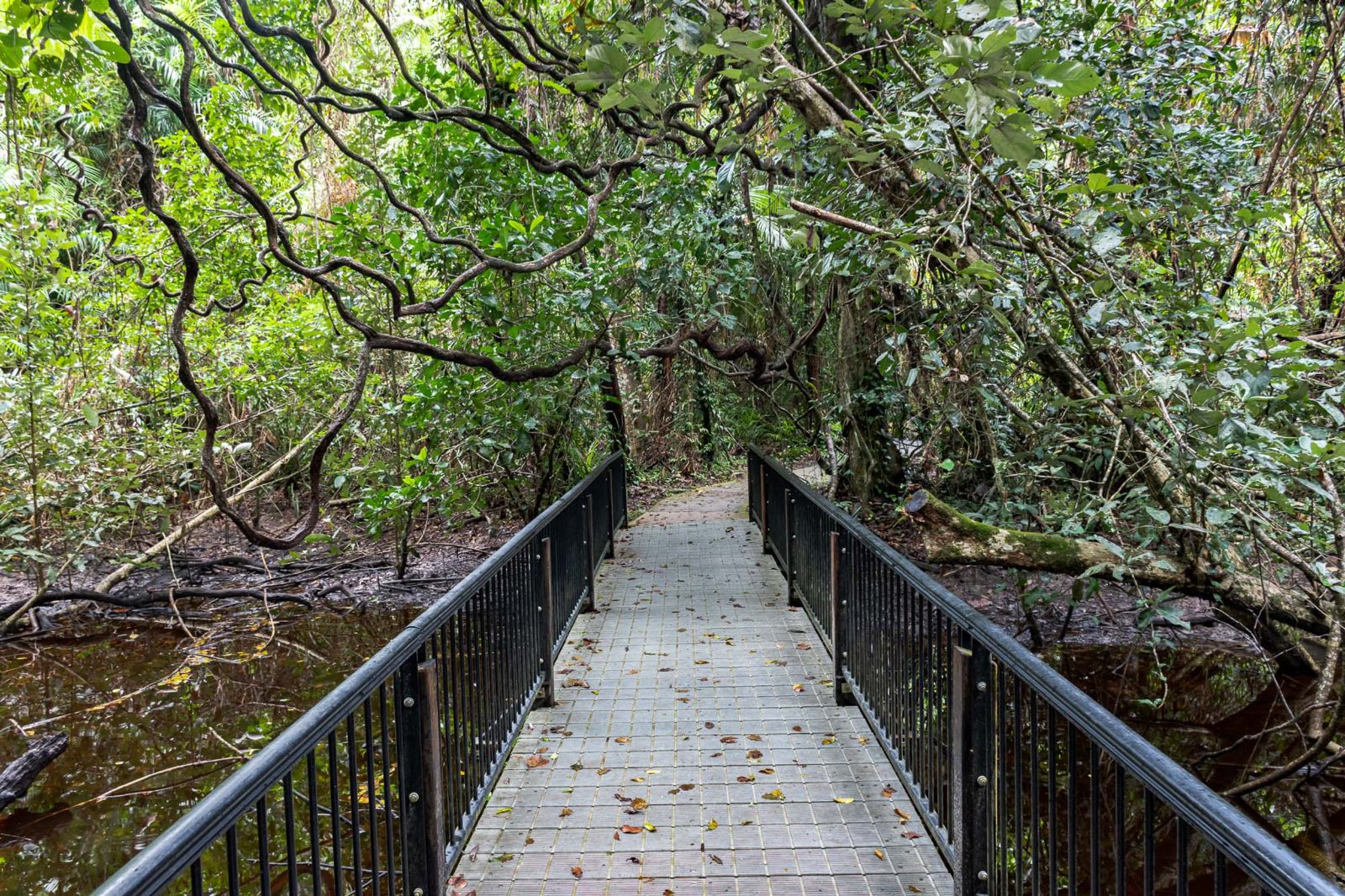
50 min drive
Situated within Cape Tribulation, this short boardwalk leads to a viewing platform overlooking the coastline. It provides an accessible way to observe the landscape from an elevated position.
Everything you need to know about are there crocodiles in the daintree river
Yes, the Daintree River is home to a significant population of estuarine crocodiles. These reptiles are native to the region and thrive in the brackish waters found throughout the river system.
Yes, joining a Daintree River wildlife cruise is the most effective way to spot these predators in their natural habitat. Knowledgeable guides help visitors locate crocodiles that might otherwise go unnoticed along the riverbanks.
Because the tropical climate remains warm, are there crocodiles in the Daintree River at all times of the year? Yes, they are present throughout all seasons, though their behavior and visibility can change based on the weather.
No, it is extremely dangerous to swim in the Daintree River due to the presence of apex predators. Visitors should always adhere to warning signs and prioritize safety when near the water's edge.
The best arrival window for wildlife viewing is between 06:00 and 17:00 when these reptiles frequently emerge to sunbathe. If you are wondering are there crocodiles in the Daintree River during the day, this is the prime time to find them.
Estuarine crocodiles are often found throughout the entire river, including areas near the ferry crossing. While many visitors ask are there crocodiles in the Daintree River in specific zones, they are wild animals that move freely across the waterway.
Daintree Village Crocodile Cruises
Read more GuideHow Many Crocodiles in Daintree River?
Read more Tickets & toursBest Daintree River Crocodile Cruises
Read more Tickets & toursDaintree Crocodile Tours from Cairns
Read more Tickets & toursDaintree Crocodile Tours from Port Douglas
Read more Tickets & toursMossman Gorge & Daintree Crocodile Cruise
Read more Tickets & toursDaintree River Crocodile & Wildlife Cruises
Read more GuideDaintree Crocodile Cruise Reviews
Read more GuideDaintree Crocodile Tour Prices
Read more